How to Choose a Decorative Planter: A Guide to Size, Color and Material
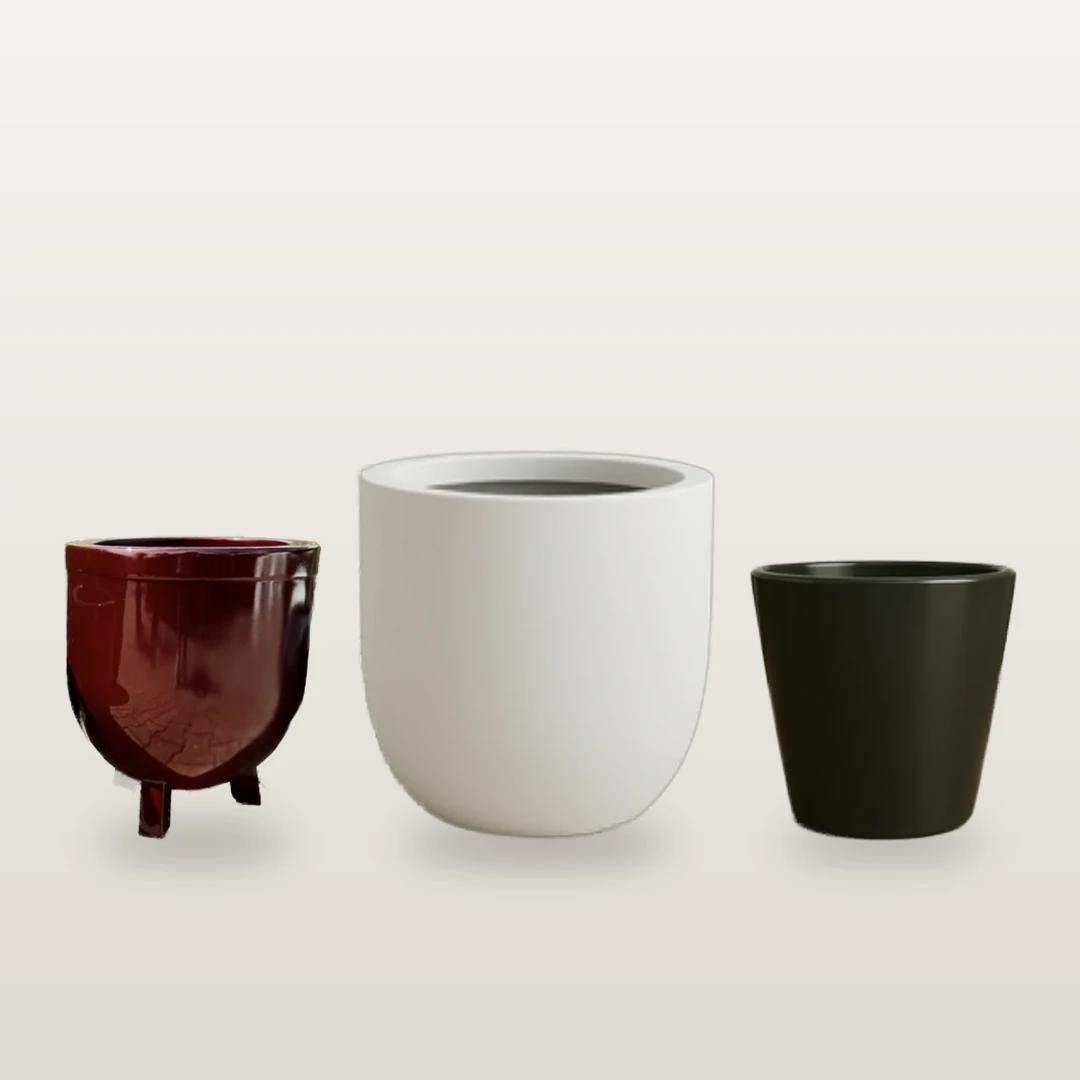
The right planter completes not only a plant but also the space it sits in. The wrong size or color can make even the most beautiful plant look dull. In this guide we cover the three essentials to consider when choosing a decorative planter: size, color and material.
1. Size and proportion
The most common mistake in planter selection is the wrong size. As a general rule, the planter should be noticeably larger than the plant's root ball — yet without overwhelming the plant. For large floor-standing forms, the planter's height should be proportional to the furniture or wall it sits beside.
When designing the space, decide whether you want a single accent or a repeating rhythm. At entrances, a symmetrical pair of planters creates a strong welcome, while repeating the same form along a long terrace sets a calm rhythm.
2. Color
Color determines how the planter speaks with the space and the plant. Neutral stone tones (anthracite, grey, beige) work with almost any architecture and let the plant stand out. Bold earthen red, burgundy or green tones turn the planter into a design element in its own right.
Consider your floor and facade color: on light floors, dark planters draw attention through contrast; on dark floors, light tones bring a sense of openness. Matte surfaces offer a calmer, more premium look.
3. Material
Material determines durability, weight and where it can be used. Fiber (glass-fiber reinforced) planters stand out for their light weight, four-season durability and design flexibility. Concrete is heavier and more brittle; ceramic is vulnerable to freezing outdoors; plastic is economical but visually limited.
Outdoors, or in areas with limited load capacity (terraces, roofs), fiber is almost always the most balanced choice.
4. Drainage and use
Drainage matters for plant health. If you plant directly, there should be a drainage hole at the base and a gravel layer beneath. Alternatively, you can place the plant inside the planter in its own plastic pot, making seasonal changes easier.
In summary
Choose size by the proportion of the space, color by the architecture and the plant, and material by where it will be used. When in doubt, custom production is the most reliable way to match size and color exactly to your project.